UNDERSTANDING PTSD: NEW THERAPIES AND APPROACHES
DOI:
https://doi.org/10.71465/bhsr27Keywords:
PTSD, Cognitive-Behavioral Therapy, Pharmacological Interventions, Virtual Reality Exposure Therapy, Transcranial Magnetic Stimulation, Psychedelic Therapy, Artificial IntelligenceAbstract
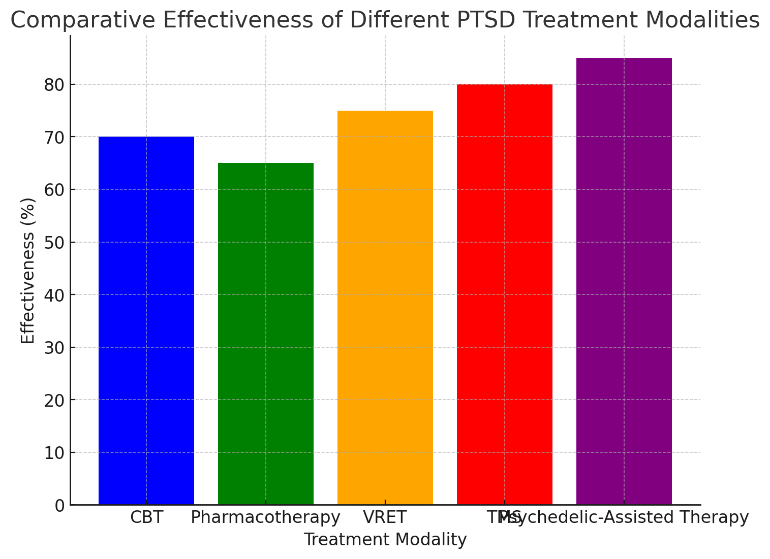
Post-Traumatic Stress Disorder (PTSD) is a severe mental health condition that affects individuals who have experienced traumatic events. Over the past decade, significant advancements have been made in understanding the neurobiology of PTSD and developing innovative therapeutic approaches. This paper explores the latest treatments, including cognitive-behavioral therapy (CBT), pharmacological interventions, virtual reality exposure therapy (VRET), and emerging neurobiological approaches such as transcranial magnetic stimulation (TMS) and psychedelic-assisted therapy. The study also examines the role of artificial intelligence (AI) in PTSD diagnosis and personalized treatment plans. Using recent empirical data, this research highlights the efficacy and challenges of these new interventions. The findings suggest that a multimodal treatment approach can significantly improve patient outcomes.
Downloads
Published
Issue
Section
License

This work is licensed under a Creative Commons Attribution-NonCommercial-NoDerivatives 4.0 International License.
All articles published in the Bulletin of Health Services Research are open access and distributed under the terms of the Creative Commons Attribution License. This permits unrestricted use, distribution, and reproduction in any medium, provided the original work is properly cited. Authors retain copyright, and the journal ensures free and permanent access to published content.